Born in Moscow in 1954, Zatulovskaya has exhibited through different European countries and all main Russian cities.
In 2004 she won the Master Prize of Moscow.
Her works are exhibited in major museums in Russia, also in Italy and in Finland.
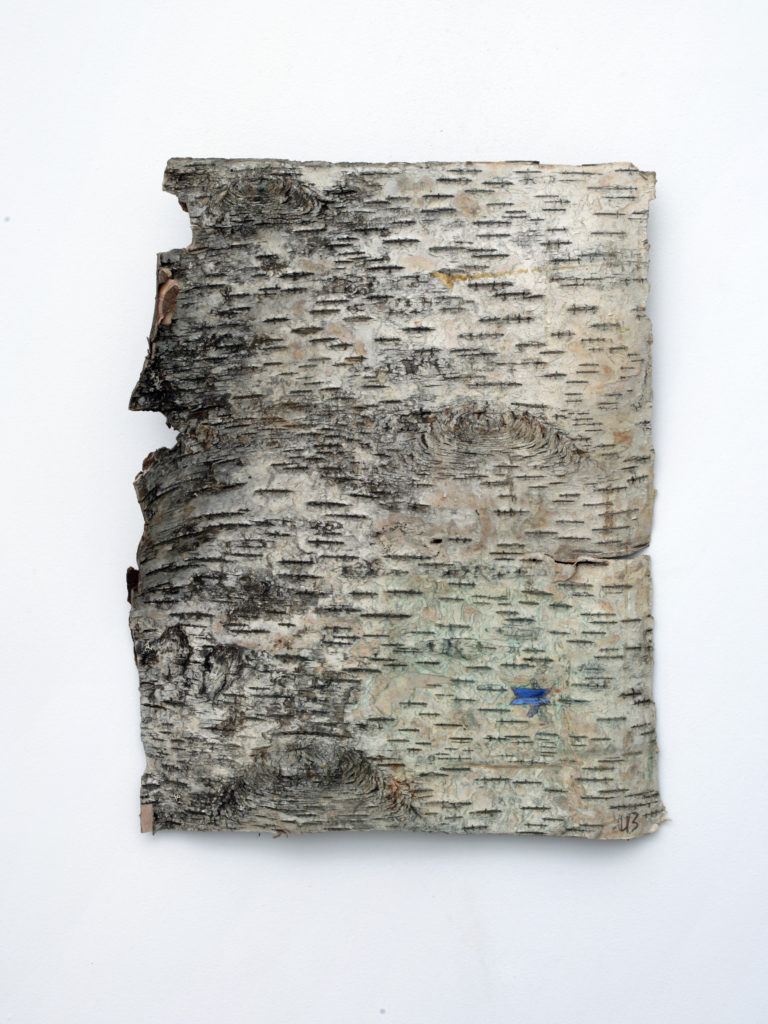
In “Siberian diary”, Zatulovskaya shares her “travel diary”.
From stage to stage of her journey, as she crosses various regions where she marks the territory with her ephemeral art, the artist sketches, draws and paints.
She follows the traces of Hanti and Mansi tribes who will disappear in the near future.
The whole of Russia is drawn in, eliciting traditions, literature, songs, and dances… Irina Zatulovskaya follows her own artistic instinct, moving away from what one usually sees in the Russian contemporary art scene by the use of historical artefacts.
Through the exhibition “Siberian diary”, she casts a nostalgic and poetic glance at her country, enabling the visitor to discover a far-away, unknown and profoundly literary Russia.
The artist sees 4 different categories describing her experience in the
Hanti and Mansi territory.
She uses the title « fourth Siberia » when she first exhibited in Moscow in 2008.
There is the Shamanic Pagan Siberia, the Tsarist-Orthodox one, then Soviet one and finally the Siberia today : from the magic mushrooms to the churches and monasteries, then the labour camps and the natural resources.
Roots Contemporary is interested in the link between Asia and Europe.
Siberia on the other hand is a historical new Asian territory and has been colonized by Russians in waves in the last decades.
Rich in natural resources like gas and petrol, Siberia is the theatre of Russian and western speculations that are threatening the native tribes.
Siberia is the bridge between Europe and Asia, the living memory of ancients’ populations and old Russian traditions like a melting pot.